
Types of Magicians: The Complete Guide
Written by Nick Rushton — Award-Winning Magician
Magicians come in all shapes, sizes and specialisms. Some perform inches from your face using nothing but a deck of cards. Others fill arenas with million-pound stage illusions. Some read minds. Some pick your pockets. And some escape from straitjackets while dangling upside down over a river.
As a professional magician with over 29 years performing at events across the UK, I've worked alongside — and in some cases trained with — almost every type of magician there is. This guide breaks down each specialism, explains what they do, and helps you understand which type of magician is right for your event.
Close-Up Magicians
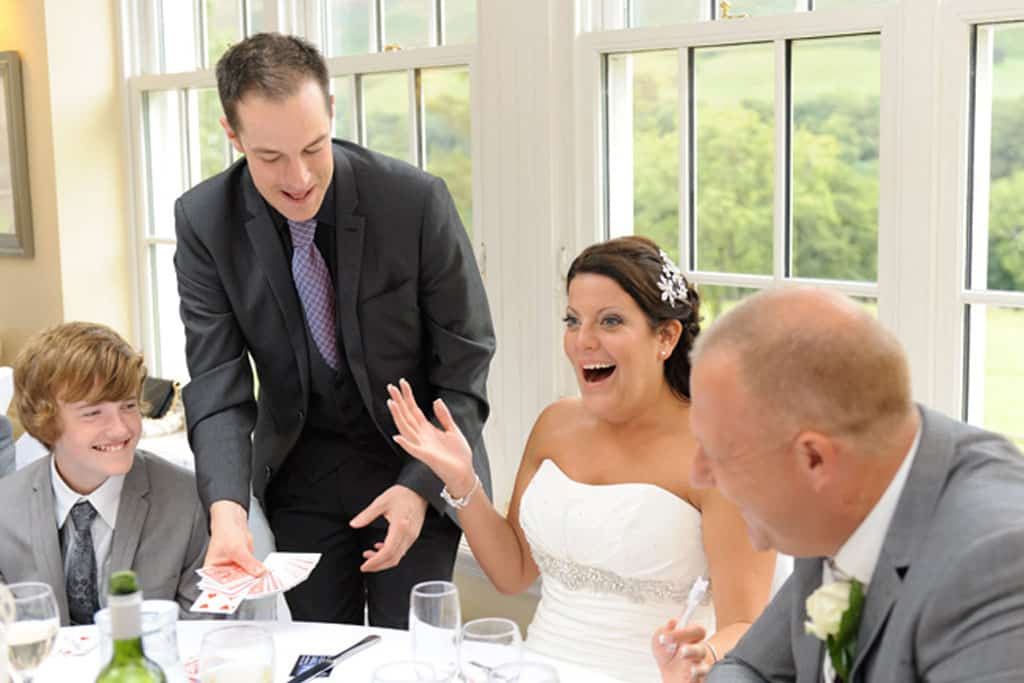
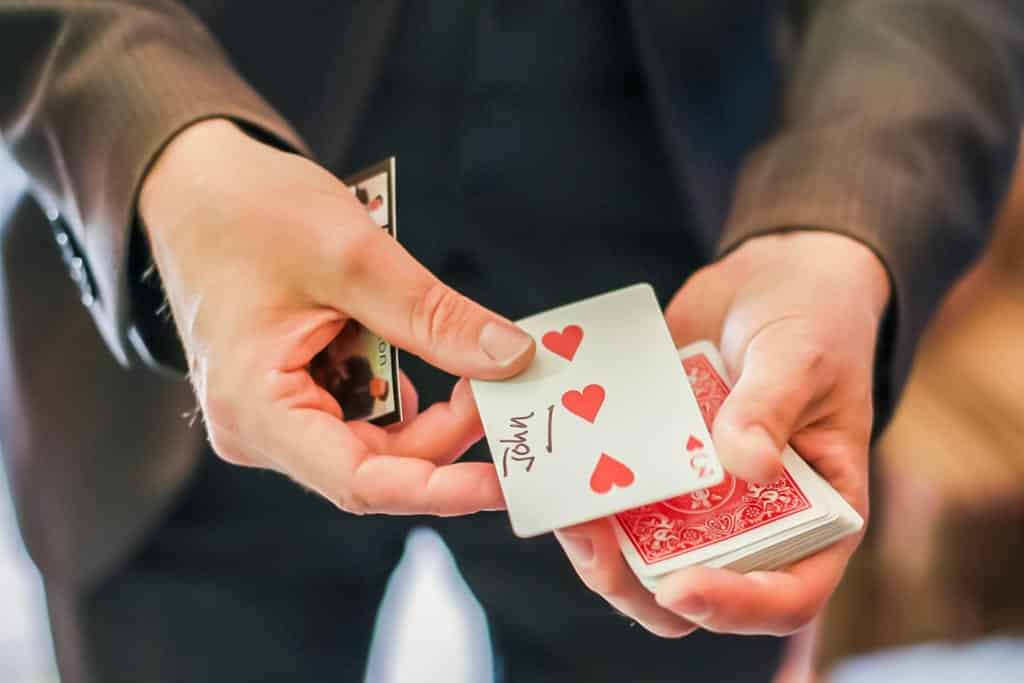
A close-up magician performs magic at close range — right in front of you, often literally in your hands. They use everyday objects: playing cards, coins, rubber bands, borrowed phones, watches and rings. No stage, no props table, no assistant. Just pure sleight of hand performed inches away.
Close-up magic is the most popular type of magic for events. The magician moves between groups of guests, performing short sets of 5–8 minutes for each group. This format works brilliantly at weddings (especially during the drinks reception and between courses), corporate events, private parties, and awards ceremonies.
What makes close-up magic so effective is the proximity. When a card changes in someone's own hand, or a borrowed ring vanishes and reappears somewhere impossible, there's nowhere to hide. The audience knows there's no trapdoor, no camera trick, no hidden assistant. That's what makes the reactions so genuine.
Best for: Weddings, corporate events, parties, drinks receptions, dinner entertainment.
Famous close-up magicians: Ricky Jay, David Williamson, Shin Lim.
If you are planning an event rather than researching styles, start with the most practical options: a close-up magician for mix-and-mingle entertainment, a table magician for meal-based events, or a wedding magician for drinks receptions and wedding breakfasts.
Sleight of Hand Magicians
Sleight of hand is the foundation of close-up magic. A sleight of hand magician uses manual dexterity — palming, switching, ditching, false transfers — to create the illusion that something impossible has happened. A coin vanishes. A card jumps to an impossible location. An object passes through a solid table.
Techniques like "the pass" (secretly moving a card from the middle of the deck to the top) and "the classic palm" (hiding a coin in an apparently empty hand) take years to master. The best sleight of hand magicians make it look completely effortless — the magic appears to happen with no visible moves at all.
Almost all close-up magicians are sleight of hand artists, though some also incorporate gimmicked props and psychological techniques alongside their manual skills.
Mentalists & Mind Readers
A mentalist specialises in effects that appear to demonstrate mental powers — reading thoughts, predicting choices, influencing decisions, and revealing personal information they couldn't possibly know.
Mentalism doesn't look like traditional magic. There are typically no playing cards, no visual tricks, and no "ta-da" moments. Instead, it's quieter and more unsettling. Someone thinks of a word, and the mentalist reveals it. A sealed envelope is opened to show a prediction written hours earlier that matches a free choice made seconds ago. The reaction isn't "wow" — it's "how on earth?"
Many professional event magicians (myself included) blend close-up magic with mentalism. This gives guests the visual impact of sleight of hand plus the psychological punch of mind reading in one performance. Read more about the difference between a magician and a mentalist.
Best for: Corporate events, dinner entertainment, after-dinner shows.
Famous mentalists: Derren Brown, Max Maven, Banachek, Luke Jermay.
Pickpocket Magicians
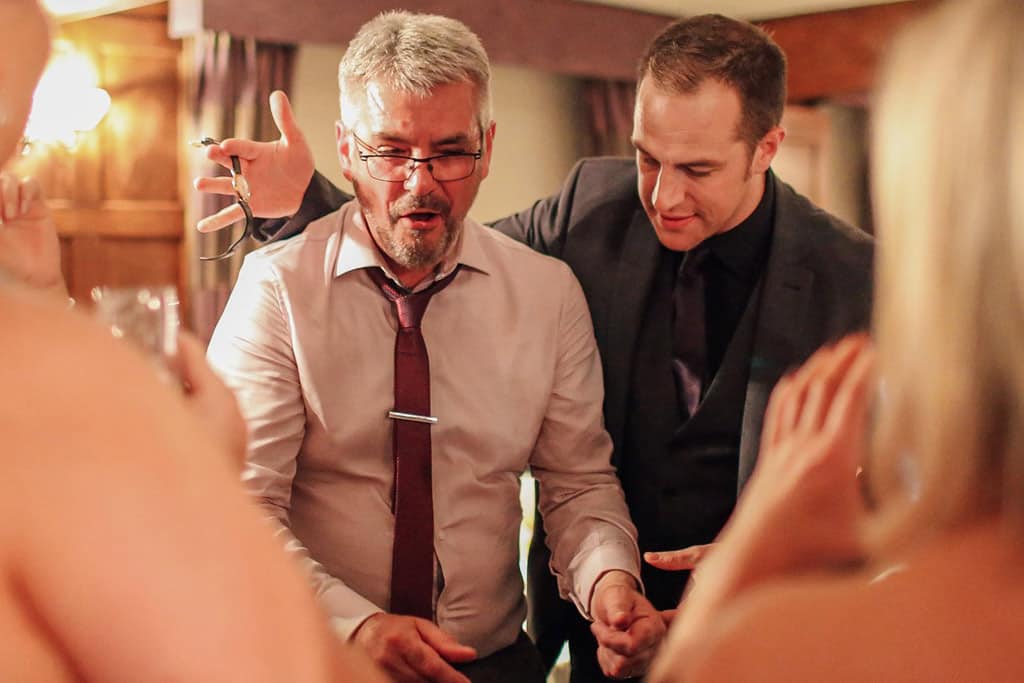
One of my personal favourite types of magician. A pickpocket magician uses misdirection and sleight of hand to steal objects from spectators — watches, wallets, phones, belts, ties — without them noticing. When performed as entertainment, everything stolen is returned, creating hilarious moments as spectators realise what's been taken from them.
Pickpocket magic requires exceptional misdirection skills. The magician must control where the spectator is looking, what they're thinking about, and what they're feeling — all while their hands do the work. It's a specialism that sits at the intersection of magic, psychology and pure nerve.
Pickpocket acts work brilliantly at corporate events and parties where there's a stage element — the magician can call volunteers up and demonstrate the art of pickpocketing in a comedic and entertaining way.
Best for: Corporate events, stage shows, comedy nights.
Famous pickpocket magicians: Apollo Robbins, James Brown, Bob Arno, James Freedman.
Comedy Magicians
A comedy magician leads with humour. The magic is the vehicle, but the laughs are the destination. Comedy magicians typically perform cabaret or stage shows where the entertainment value comes as much from their personality, timing and audience interaction as from the tricks themselves.
This style works particularly well for after-dinner entertainment, Christmas parties, and corporate away-days where the brief is "make everyone laugh." The best comedy magicians can get an entire room roaring while simultaneously performing magic that's genuinely impressive.
Best for: Christmas parties, after-dinner shows, family events.
Famous comedy magicians: Penn & Teller, Tommy Cooper, Mac King, Pete Firman.
Street Magicians
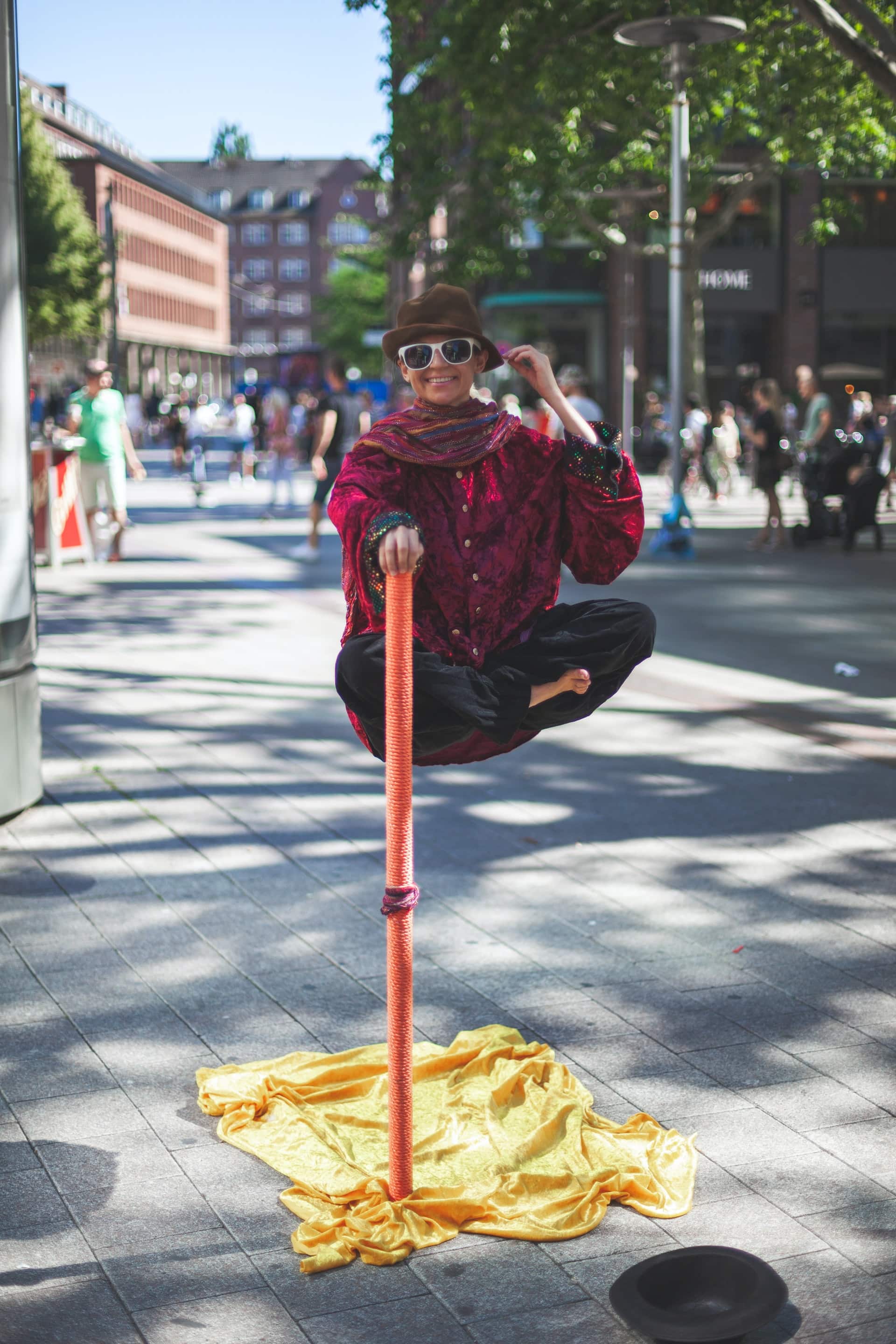
Street magicians perform in public spaces — town squares, markets, tourist hotspots — typically gathering a crowd (known as "busking") and passing a hat for tips at the end. Covent Garden in London is one of the best places in the UK to watch street magic.
Street magic demands a unique skill set. The magician must attract a crowd from nothing, hold their attention against every possible distraction (traffic, other performers, weather), and build to a finale strong enough that people reach for their wallets. It's arguably the hardest environment to perform in.
The term "street magic" was popularised by David Blaine in the late 1990s, though his TV specials were actually closer to close-up magic performed for strangers on the street rather than traditional busking.
Best for: Public entertainment, festivals, TV.
Famous street magicians: David Blaine, Dynamo, Troy.
Children's Entertainers
A children's entertainer specialises in performing for young audiences — typically at birthday parties, school events, and family fun days. Their shows involve audience participation, comedy, colourful props and age-appropriate magic.
Don't underestimate this specialism. Managing a room of twenty excitable 6-year-olds requires a completely different skill set to performing for adults at a corporate dinner. The magic needs to be visual and immediately understandable, the patter needs to be engaging without being patronising, and the performer needs the energy and crowd management skills to keep a room of children focused for 45 minutes.
Best for: Birthday parties, school events, family days, holiday clubs.
Stage Magicians
Stage magicians perform on a platform or stage, typically for seated audiences of 50 to several hundred people. Their magic uses larger props — linking rings, rope tricks, production boxes, dove acts, manipulation acts — visible from a distance. The performance is theatrical, with lighting, music and a rehearsed running order.
Stage magic is often seen on cruise ships, at holiday parks, in theatres, and at large corporate events where a show element is required. A stage magician's act is fundamentally different from close-up magic: it's a one-to-many performance rather than one-to-few.
Many stage magicians also perform cabaret — a mid-ground between close-up and full stage, typically for audiences of 30–100 in a banquet or dining setting.
Best for: Theatre shows, cruise ships, large corporate events, cabaret evenings.
Illusionists
Illusionists perform the biggest, most spectacular magic — making people appear and disappear, sawing assistants in half, levitating above the stage, walking through solid walls. These are the tricks that fill arenas and headline Las Vegas residencies.
Grand illusion requires serious infrastructure: custom-built props costing tens of thousands of pounds, a crew of technicians and assistants, a full stage with wings, lighting rigs and sound systems. It's closer to a theatre production than a one-man act.
Because of the scale and cost, illusionists are typically booked for TV productions, large theatre tours, and major corporate productions. They're not suitable for weddings or private parties — you simply can't fit the equipment or crew into a function room.
Best for: Theatre tours, TV, arena shows, Las Vegas residencies.
Famous illusionists: David Copperfield, Siegfried & Roy, The Pendragons, Hans Klok.
Escapologists
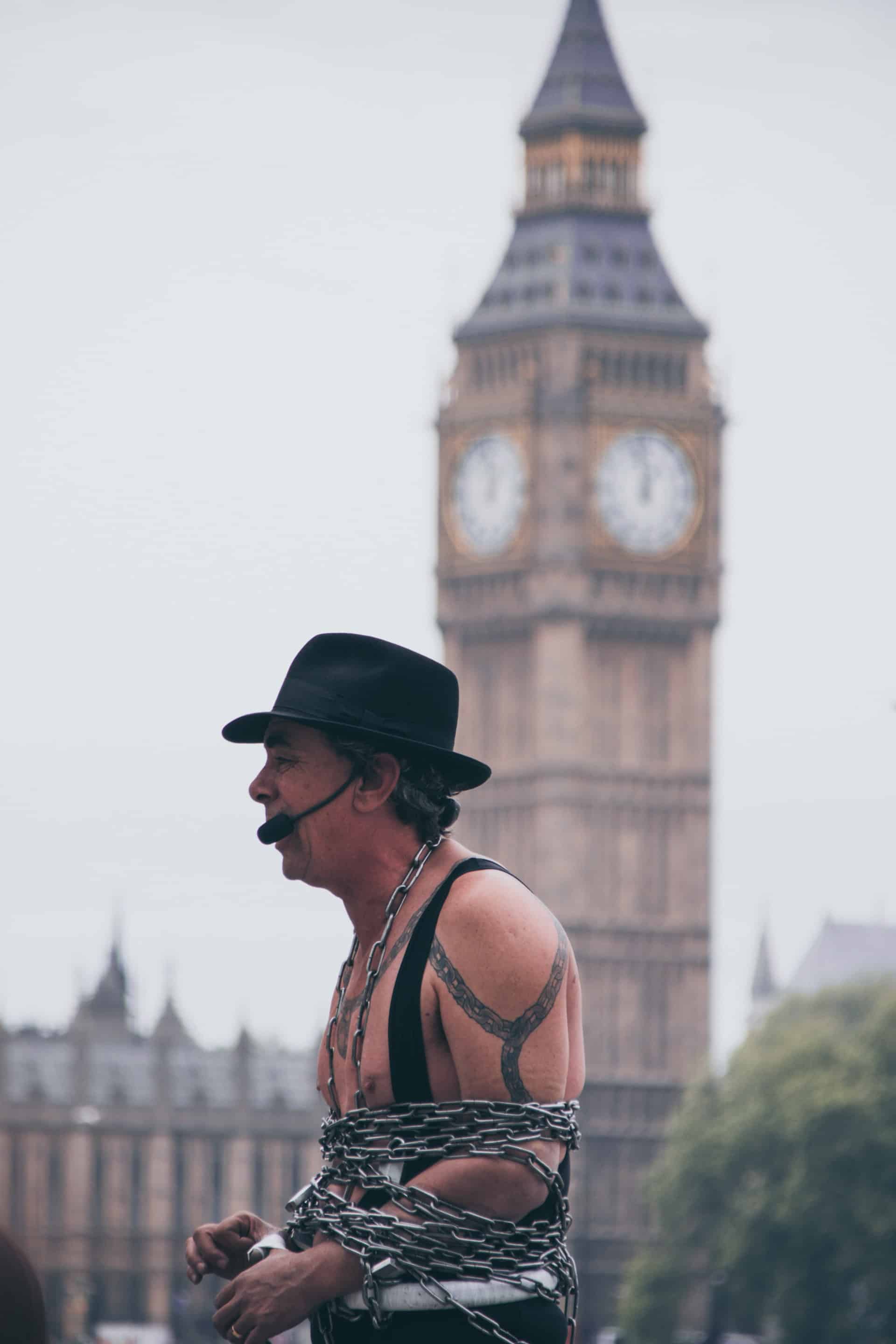
Escapologists specialise in escaping from seemingly impossible restraints — handcuffs, straitjackets, locked boxes, chains, underwater tanks. The entertainment comes from the drama: can they escape before time runs out? The audience knows it's a skill rather than "real" magic, but the tension and danger make it compelling viewing.
Harry Houdini remains the most famous escapologist in history. Modern performers like Jonathan Goodwin have pushed the boundaries further, combining escapology with genuine danger elements.
Best for: Theatre shows, outdoor events, TV stunts.
Famous escapologists: Harry Houdini, Jonathan Goodwin, Alan Alan.
Prestidigitators
"Prestidigitation" literally means "quick fingers" — it's an old-fashioned term for sleight of hand magic. A prestidigitator uses manual dexterity to make objects appear, vanish, change and transpose. In modern usage, the term is rarely used outside of academic or historical contexts, but you may still encounter it on older promotional material.
In practice, a prestidigitator and a sleight of hand magician are the same thing.
Supernatural & Bizarre Magicians
Some magicians present their effects as genuine supernatural phenomena rather than entertainment. They may claim to channel spirits, demonstrate telekinetic powers, or perform séance-style effects. This style — sometimes called "bizarre magic" — creates a darker, more atmospheric experience than traditional magic.
Whether or not you believe the claims, the theatrical presentation can be extremely effective. Séance shows and supernatural-themed magic experiences have seen a resurgence in popularity at fringe festivals and immersive entertainment venues.
Metal Bending Magicians
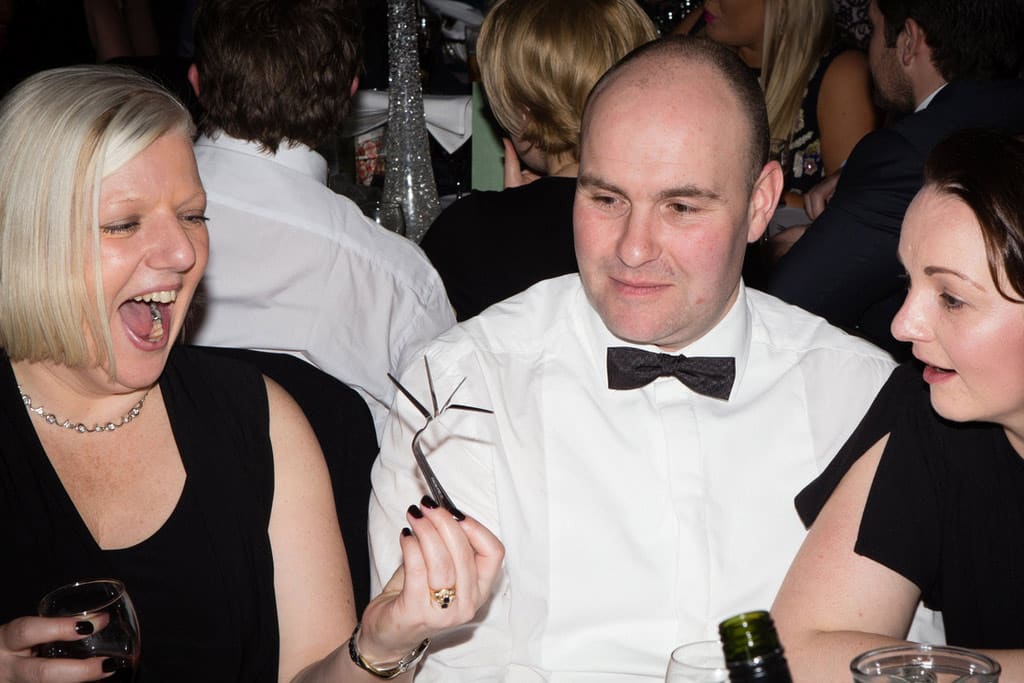
A niche specialism where the performer apparently bends metal objects — spoons, forks, keys, nails — using only the power of their mind. Uri Geller famously popularised this in the 1970s with his spoon-bending demonstrations on live television.
Metal bending effects are now commonly incorporated into mentalism and close-up magic acts rather than being a standalone specialism. When performed well — particularly with a borrowed key or ring — the effect is deeply unsettling because the spectator knows there was no opportunity for trickery.
Parlour Magicians
Parlour magic (sometimes spelled "parlor") sits between close-up and stage. It's designed for audiences of 10–50 people in a drawing room, dining room, or small function space. The props are slightly larger than close-up magic but don't require a full stage — think linking rings, rope tricks, card-to-impossible-location effects.
Parlour magic was the dominant form of entertainment magic in Victorian and Edwardian England, when wealthy families would hire a magician to perform in their home after dinner. While the term has fallen out of common use, the format lives on in dinner party entertainment and private dining events.
Best for: Intimate gatherings, dinner parties, private dining, small corporate events.
Famous Magicians You Should Know
Many of the world's most famous magicians span multiple categories. Here are some names worth knowing:
- Derren Brown — The UK's most famous mentalist and psychological illusionist. His TV specials and stage shows blend mind reading, suggestion, psychology and showmanship.
- David Copperfield — Widely regarded as the greatest illusionist of all time. Made the Statue of Liberty disappear on live TV. The highest-earning magician in history.
- Penn & Teller — The longest-running headliners in Las Vegas history. Their act combines comedy, magic and a unique style of revealing (and concealing) how tricks work.
- Dynamo — Bradford-born magician who became a household name with his TV series Dynamo: Magician Impossible. Known for street-style magic with a cinematic feel.
- David Blaine — Reinvented magic for a new generation with his 1997 TV special Street Magic. Later became famous for extreme endurance stunts.
- Paul Daniels — Dominated UK television magic for over a decade with The Paul Daniels Magic Show. A hugely skilled magician and entertainer.
- Shin Lim — Won America's Got Talent twice with his visually stunning close-up card magic. Performs completely silently, letting the magic speak for itself.
- Apollo Robbins — Known as "The Gentleman Thief," he's widely regarded as the world's greatest pickpocket performer.
- Uri Geller — The world's most famous spoon bender. Whether you believe his claims of genuine psychic powers or not, he's one of the most recognisable names in magic.
Read more in our guide to famous magicians in the UK and the story behind Britain's Got Talent's ultimate magician winner.
Which Type of Magician Should You Hire?
If you're booking a magician for an event, here's a quick guide:
- Wedding: Close-up magician. They'll perform during the drinks reception, between courses, and at the evening party. No stage or equipment needed.
- Corporate event: Close-up magician with mentalism. The combination of visual magic and mind reading gives guests a varied performance. Works at dinners, conferences, product launches and awards evenings.
- Private party: Close-up magician for adult parties, children's entertainer for kids' parties.
- Christmas party: Close-up magician for the drinks/dinner, or a comedy magician for a cabaret-style after-dinner show.
- Theatre show or large event: Stage magician or illusionist, depending on budget and venue size.
- Trade show or exhibition: Close-up magician who can draw crowds to your stand and deliver your brand message through magic.
For most events — weddings, corporate dinners, parties, awards evenings — a close-up magician who includes mentalism is the best choice. That's exactly what I do. My performance blends visual close-up magic with mind reading and predictions, performed at close range as I move between groups of guests.
Types of Magicians — Summary
The world of magic is far more varied than most people realise. From the close-up magician performing card tricks in your hands to the illusionist making an elephant vanish on a Las Vegas stage, each specialism requires different skills, different props, and a different performance environment.
The common thread is this: every type of magician is trying to create a moment where you believe — even for a split second — that the impossible just happened. Whether that's a coin vanishing from your closed fist or a person appearing inside a previously empty box, that moment of genuine astonishment is what magic is all about.
If you're looking to hire a magician for your next event, get in touch for a free, no-obligation quote. I specialise in close-up magic, sleight of hand, pickpocket magic, mentalism, predictions and comedy magic — performed at close range for your guests.